NFL Simulator
Win the division or sneak in with a wild card? Pick your team and see which games could make or break its season.
How to run the NFL simulator
Say the Bears beat Green Bay. Who else should Chicago fans root for on Sunday? Start with Chicago in the NFL simulator and give the question a week. The report below shows how a division race can turn on a game the Bears never play.
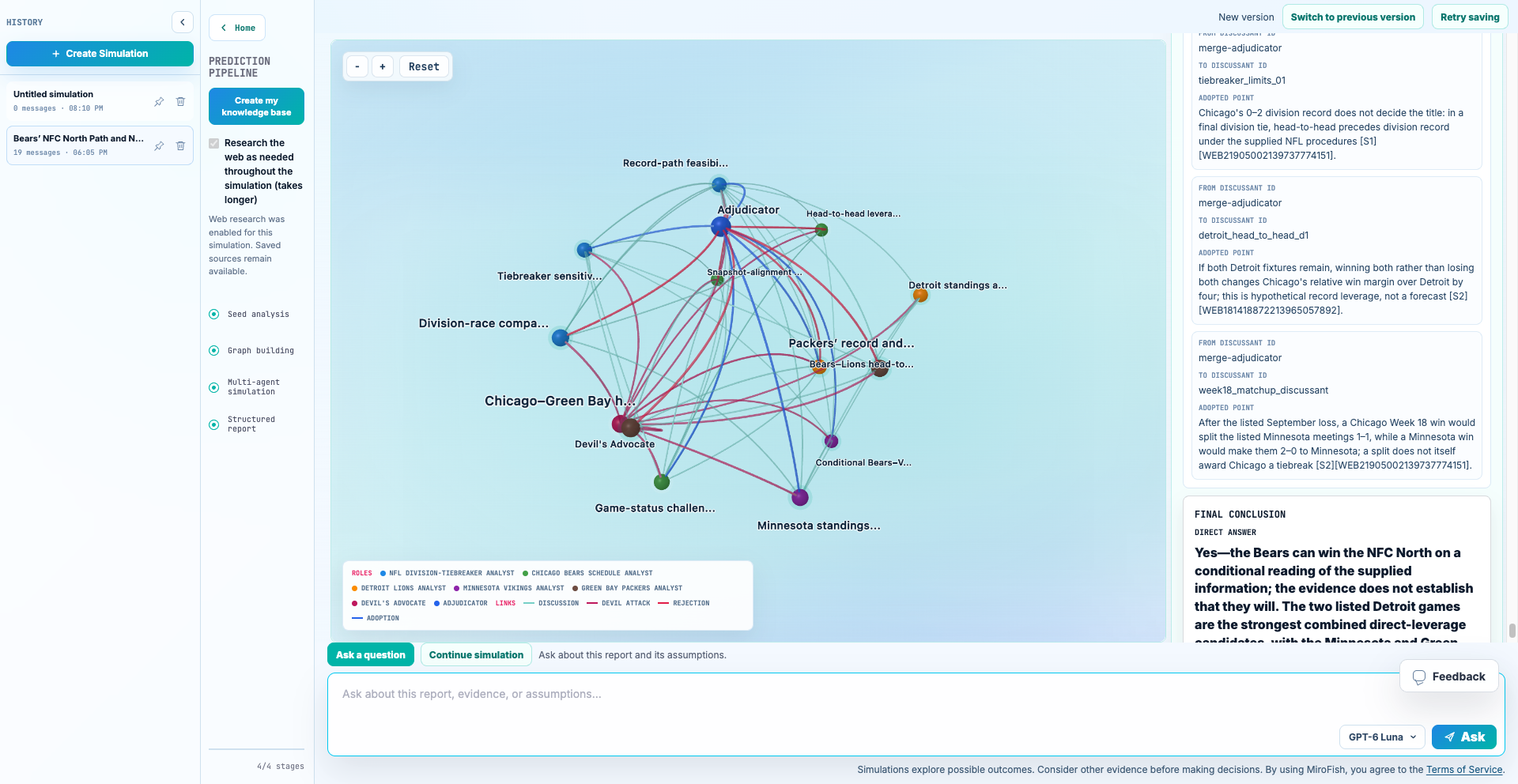
Set up Sunday
Your team’s question is already in the box. Add the week and the result you want to test, then hit Send.
Check the game plan
Read the draft and confirm the teams, week and assumptions. Choose Confirm Seed to start the run. Web research is on, so MiroFish can look up NFL standings and injury news.
Challenge the call
When the report is ready, use Ask a question to dig into a tiebreaker. Choose Continue simulation to see what changes if Green Bay wins instead.
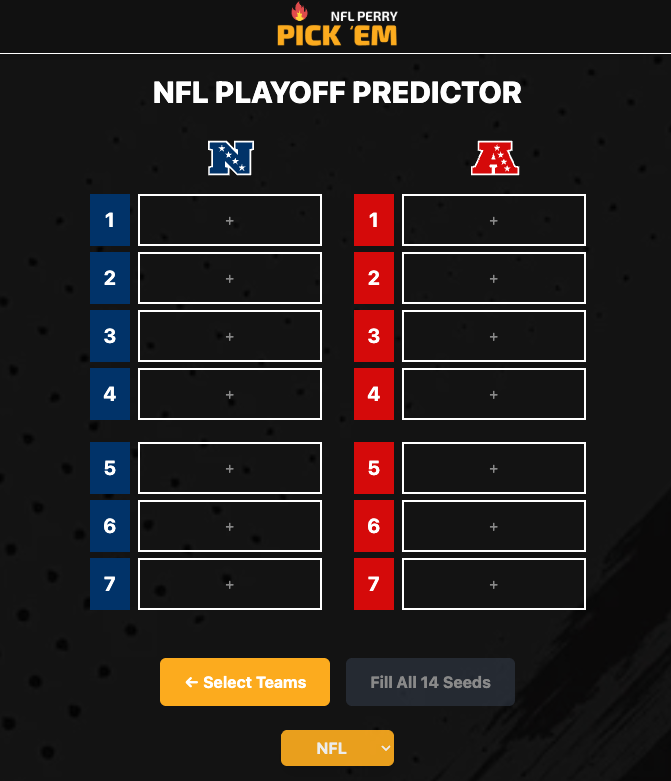
Which results put your team in the NFL playoffs?
Pick one team in Playoff path. The NFL simulator opens an editable question about that team. Leave it as written for the current race, or give it a season and a week. Start the simulation, and MiroFish looks for the standings, remaining games and tiebreakers that apply to that race.
A division title and a wild card are two different routes into the NFL playoffs. Ask for each route separately. Suppose a win leaves your team tied with its division rival. Which team gets the title, and where would the runner-up stand in the wild-card race? Ask the NFL simulator to name the tied teams and show which tiebreaker decides each place. Then change the rival’s result from a win to a loss. You can see whether that Sunday game decides a berth, a seed or just the order of the teams on your screen.
Buffalo, Week 17 of 2017
Playoff question: “It’s before Week 17 of 2017. If the Bills beat Miami, whose game should I watch next? Use only what fans knew before kickoff.”
If Buffalo beats Miami, keep an eye on Baltimore. A Ravens loss puts the Bills in. If Baltimore wins or ties, Buffalo can still get in if neither the Titans nor the Chargers wins.
What happened: Buffalo beat Miami 22–16. Cincinnati scored on fourth-and-12 and beat Baltimore 31–27. Compare the Bills’ pregame paths with their postgame recap.
- Your questionWhich team? Which week?
- Read the standingsWho is ahead, and who wins a tie?Remaining scheduleWho still plays whom?
- Compare possible finishesChange one remaining result. Does the route stay open?
- Read your playoff pathSee what your team controls and where it needs help.
How does the NFL simulator compare a matchup?
Pick two teams in Game matchup. The simulator looks for their next meeting, where they’ll play, recent games and who’s available. No meeting on the schedule? It treats the game as a what-if. To revisit a classic instead, replace the question with the date, score and time left.
For a scheduled NFL game, anchor both sides of the comparison to the same injury report and venue. Say the visiting quarterback is questionable. First ask how his team would attack the home defense if he starts. Run the same matchup in the NFL simulator with the backup under center. Look for a football reason the pick changes: fewer deep throws, more pressure on third down, or one less rushing threat near the goal line. If both picks still favor the visitors, ask which advantage survives the change at quarterback.
Bills–Chiefs: put 13 seconds back on the clock
Matchup question: “January 23, 2022. Buffalo leads 36–33. Kansas City has the ball at its own 25 with 13 seconds left. Who has the edge right now? Leave the ending out.”
Buffalo has a three-point lead and very little clock to defend. If Kansas City gains only a few yards, the kick is still out of reach. The reply is that Kansas City only needs field-goal range to tie. Test that reasoning by changing just the deficit to four points. Now reaching field-goal range leaves Kansas City short. Which argument holds up depends on the score as well as the clock.
What happened: two completions set up a 49-yard tying kick. The Chiefs won 42–36 in overtime. That’s the official scoring record; the four-point deficit is a what-if.
- Start from the same factsCheck the venue, recent form and available players.
- One viewMake a first pick and give the reason.Another viewJudge the same evidence independently.
- Challenge the picksWhat did each side overlook? Would it change the call?
- Read the verdictSee who has the edge, why, and what could flip it.
NFL simulator questions
What do I enter in the NFL simulator?
Enter one team for a playoff path or two different teams for a matchup. Your picks open an editable question with web research on. You can change the week, venue or game situation before starting the analysis.
Which sources should I check in a playoff forecast?
Start with the date on the standings and the list of games left. For a tied record, look for the league rule that separates those specific teams. A forecast says what still has to happen; a clinched berth means no remaining result can knock the team out.
Does the NFL simulator give exact win probabilities?
MiroFish gives a reasoned pick. It compares the evidence for each side rather than playing the game thousands of times and counting wins. Treat confidence as a judgment. A pick is easier to trust when you can check its sources and explain what would overturn it.
Can I test an injury or a different game situation?
Yes. Keep the rest of the question the same and change one detail, such as “the starting quarterback is out.” Compare the reasons in the two reports. If an injury is still unconfirmed, keep both versions open until the team announces who’s playing.
Can I use a classic game to test a prediction?
Use a classic NFL game to check the reasoning. Give the simulator a cutoff and ask for sources available by then. Keep the actual result for comparison afterward. A model may already know the ending, so matching the final score would not establish prediction accuracy.
Can I try the NFL simulator for free?
Yes. Guests can run one free analysis; signing in gives you two more. Each allowance is granted once. No credit card is required. See plans and allowances for continued use.