Financial prediction is stronger when it compares scenario paths.
MiroFish does not promise a magic market number. It helps turn a financial question into grounded seed material, competing assumptions, simulated stakeholder reactions, and a report that shows what to verify next.
MiroFish final report interface used here to explain financial prediction.
1Focused reader question
3MiroFish product images from the notepad set
2:30Animated workflow walkthrough with input, graph, agents, simulation, and report
Direct answer
If you searched financial prediction, you probably want help with an uncertain market, company, funding, demand, or pricing question. The useful answer is not a single confident forecast. It is a structured view of what could move the outcome, which signals matter, and how quickly the story might change.
MiroFish is useful when a financial topic depends on human behavior: investor reactions, customer demand, competitor moves, policy response, media narratives, or confidence shifts. It can organize those forces into scenario branches so a team can discuss the risk before it acts.
Turn your question into a reviewable scenario
Use these steps to move from an initial question to a scenario, report, or practical next action.
Seed -> graph -> agents -> report
Name the decision
Write the financial choice in one sentence: raise, wait, price, hedge, launch, hire, buy, sell, or investigate.
Attach source material
Upload only the memos, charts, public facts, notes, and assumptions that explain the decision. Remove stale speculation.
Separate actors
Let MiroFish model investor, customer, regulator, competitor, and internal-team perspectives instead of blending them into one average voice.
Read the report as a checklist
Use the report to identify the next outside evidence to check, not as permission to skip diligence.
Build a quick scenario worksheet
Draft the first MiroFish run on this page before opening a workspace.
Interactive worksheet
Financial prediction practical checklist
These checkpoints keep the page tightly matched to the exact search phrase while staying useful for a real MiroFish run.
Reader fit
Financial prediction guide checkpoint: Reader intent: a financial prediction visitor should get the short answer, the right MiroFish workflow step, and a concrete way to continue without hunting through the site.
Financial prediction guide checkpoint: Source packet: use A concise market memo, the decision date, the time horizon, known catalysts, opposing arguments, recent evidence, constraints, and the exact choice you need to make. Keep the first packet compact so the result can be traced back to evidence instead of broad prompting.
Financial prediction guide checkpoint: Workflow fit: connect the search phrase to seed material, graph review, role setup, simulation events, and a report that can be challenged by a human reader.
Financial prediction guide checkpoint: Report standard: the best result is A financial scenario report with base, optimistic, defensive, and surprise paths; key assumptions; weak evidence; likely stakeholder reactions; and follow-up questions for real-world validation. That output should preserve assumptions, disagreement, and next actions rather than sounding certain.
Financial prediction guide checkpoint: Verification habit: mark which claims came from source context, which came from agent reaction, and which still need a fresh outside check before action.
Financial prediction guide checkpoint: Rerun trigger: choose one changed condition from the report and compare it with the baseline instead of changing the prompt, roles, and evidence all at once.
Financial prediction guide checkpoint: Decision use: treat the page as a planning aid, then move into MiroFish only after the question, actors, time horizon, and limit are clear.
Financial prediction guide checkpoint: Boundary: This is decision support, not investment, legal, accounting, tax, or trading advice. Current prices, filings, regulation, and professional review still matter. A useful reader leaves with a sharper question, not a guarantee.
Prepare a useful first run
For financial prediction, the strongest starting point is not a long prompt. It is a small operating brief that says what changed, who is affected, what evidence is known, and what decision the reader needs to make. Keep the first run narrow enough that a reviewer can trace every major output back to the source packet.
Use the preparation note on this page as the boundary for the first packet: A concise market memo, the decision date, the time horizon, known catalysts, opposing arguments, recent evidence, constraints, and the exact choice you need to make. A good packet also labels dates, separates facts from assumptions, and avoids private or stale material that would make the report difficult to trust.
The report should be treated as a working document. When it makes a claim, ask whether the claim came from the uploaded context, an inferred relationship, an agent reaction, or a gap that still needs outside verification. That habit keeps the workflow practical for teams that need a reviewable answer rather than a dramatic prediction.
Review checklist
Before acting on a MiroFish output, check whether the scenario stayed inside the question you asked. The most useful output for this page is: A financial scenario report with base, optimistic, defensive, and surprise paths; key assumptions; weak evidence; likely stakeholder reactions; and follow-up questions for real-world validation. The key limit is equally important: This is decision support, not investment, legal, accounting, tax, or trading advice. Current prices, filings, regulation, and professional review still matter.
Name the decision. Write the financial choice in one sentence: raise, wait, price, hedge, launch, hire, buy, sell, or investigate.
Attach source material. Upload only the memos, charts, public facts, notes, and assumptions that explain the decision. Remove stale speculation.
Separate actors. Let MiroFish model investor, customer, regulator, competitor, and internal-team perspectives instead of blending them into one average voice.
Read the report as a checklist. Use the report to identify the next outside evidence to check, not as permission to skip diligence.
What to compare in the output
Use these checkpoints to turn the first MiroFish result into a grounded next action.
Review before action
Market narrative: News, analyst notes, customer conversations, and competitor claims. Shows which story could spread faster. Check live sources and fresh data.
Demand uncertainty: Pipeline notes, churn risk, pricing history, and buyer objections. Separates adoption paths from wishful targets. Validate with sales and retention data.
Capital or liquidity pressure: Runway, timing, obligations, and stakeholder incentives. Models pressure points and negotiation behavior. Review with finance professionals.
Downside branch: The strongest case against the plan. Keeps the report from becoming a one-sided pitch. Act only after the weak facts are checked.
Watch the full MiroFish workflow
This 2 minute 30 second animated walkthrough moves from source material through graph construction, agent activity, simulation events, report review, and follow-up questions.
2:30 animated walkthrough
Follow the full animated workflow, then use the page-specific checklist to prepare your own MiroFish run.
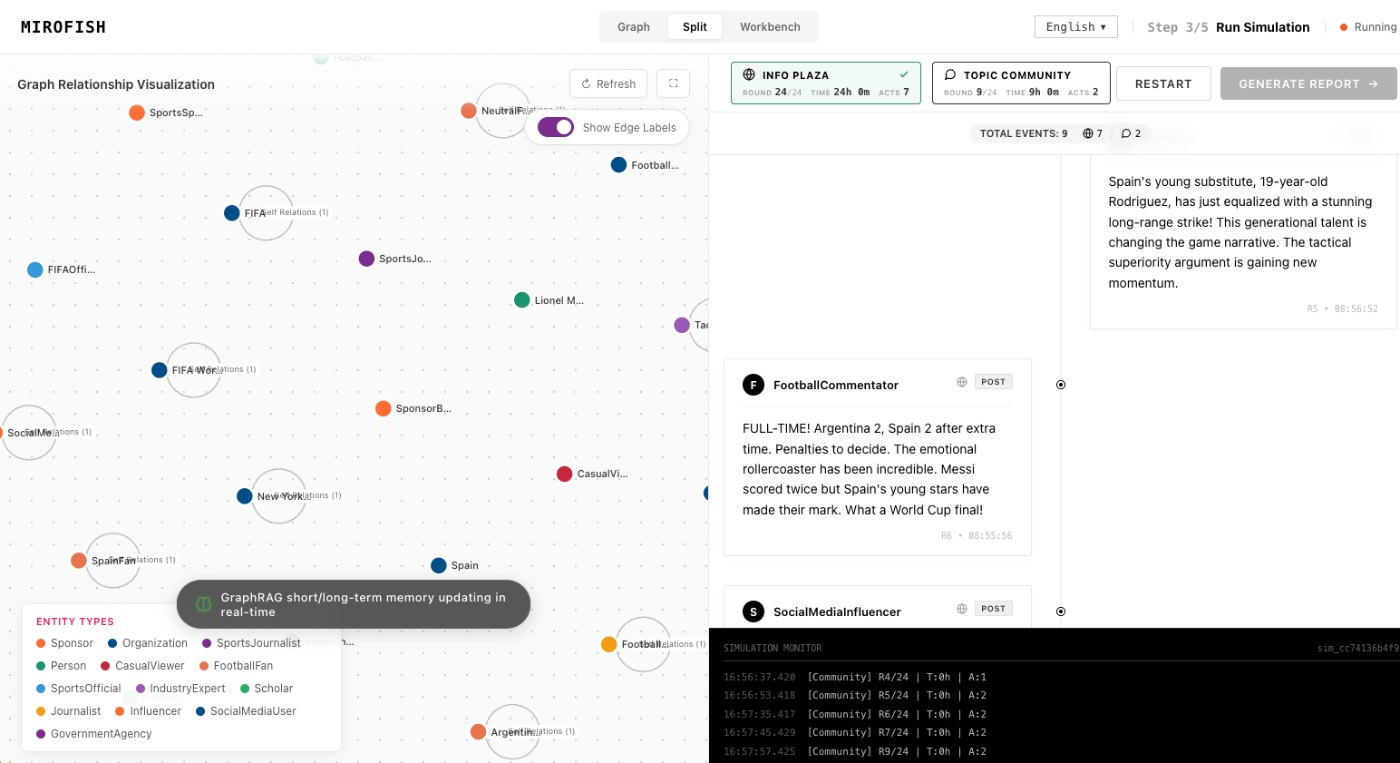
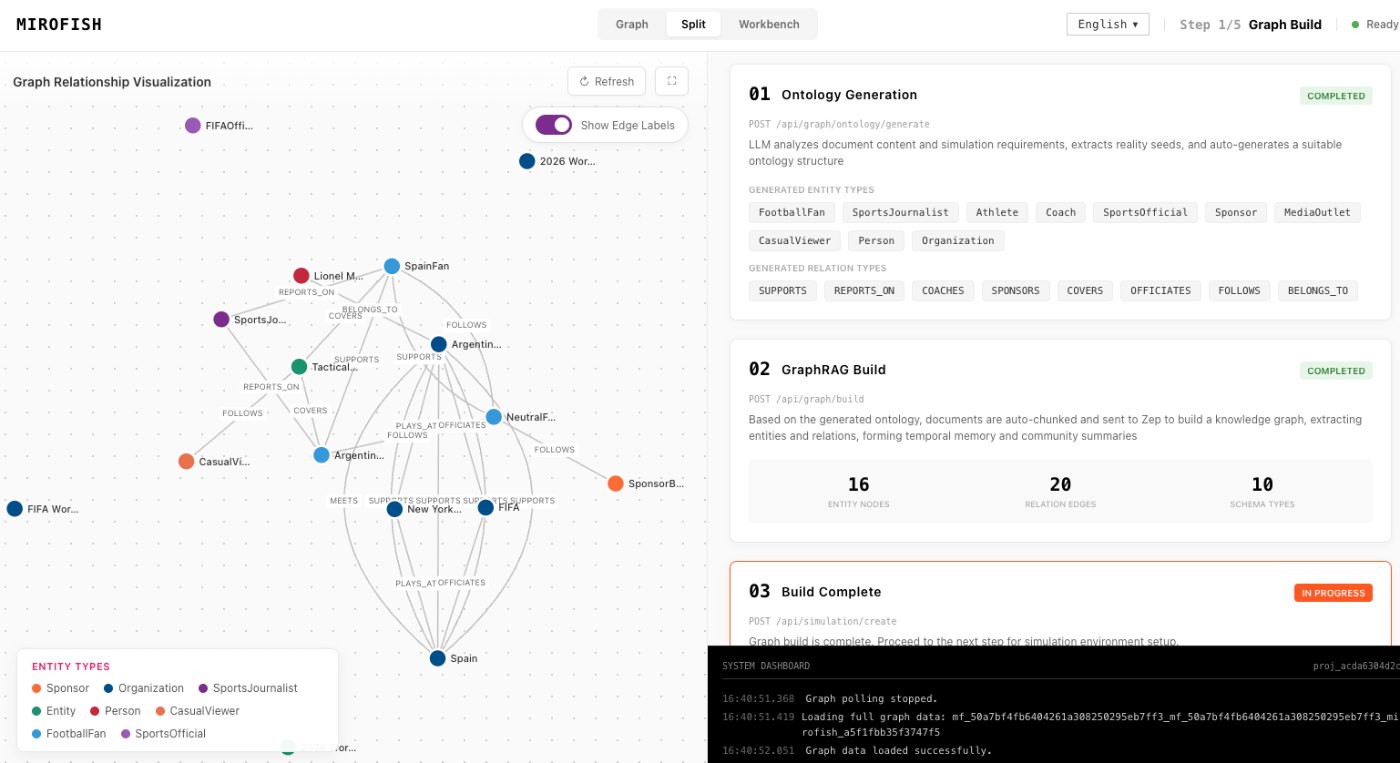
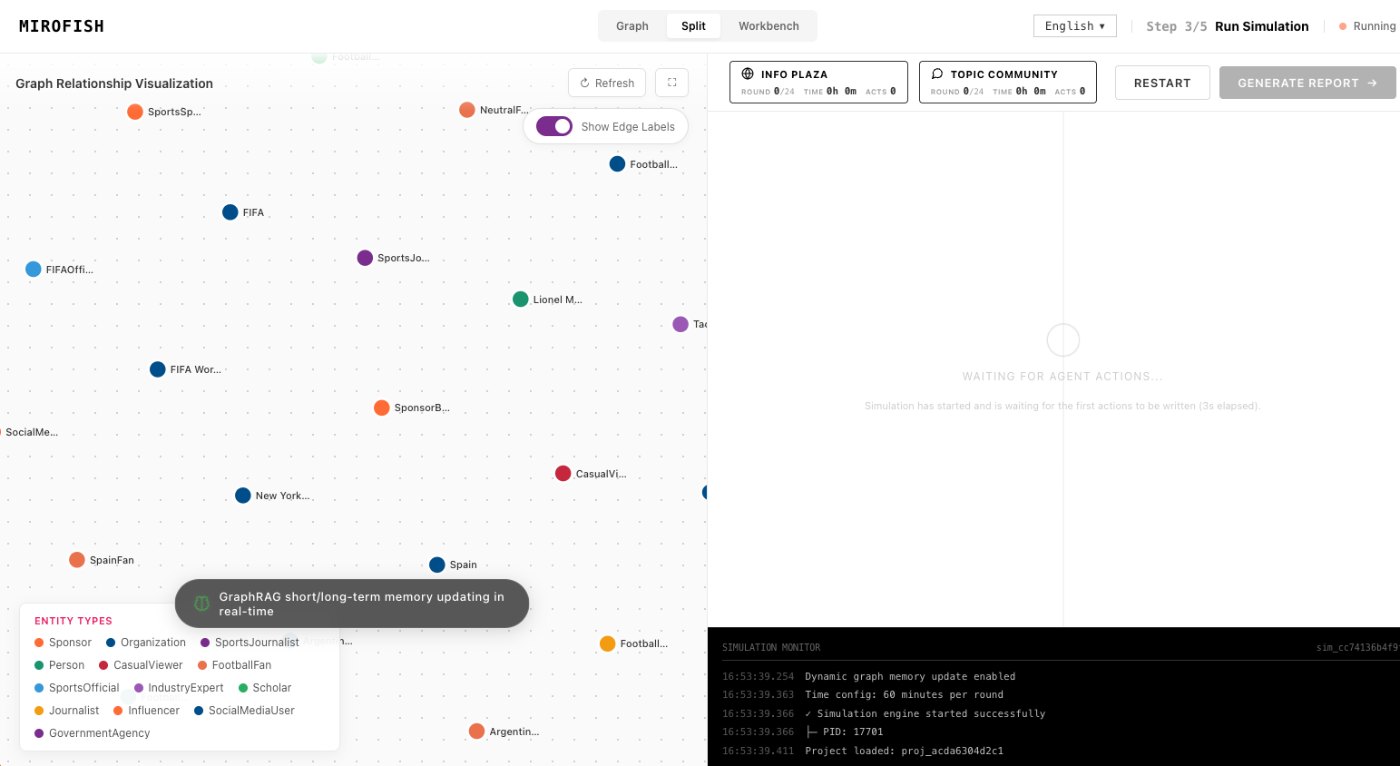
Product screenshots from the workflow
These images come from the notepad MiroFish image set and are used as concrete workflow references rather than decoration.
2 more images
MiroFish simulation progress screen used as a concrete workflow reference.MiroFish ReportAgent review screen used as a concrete workflow reference.
A realistic use case
A founder considering a new enterprise pricing tier can simulate how buyers, finance teams, competitors, and existing customers might react. The report can reveal a revenue upside branch, a procurement-friction branch, and a trust-risk branch that need different evidence.
The value of the page is practical: define the job, prepare the right input, read the output with its limits visible, and choose a next step that can be checked outside the page.
How to read the report
Read a MiroFish report as a map of assumptions and reactions. Mark source-backed claims, uncertain claims, and follow-up questions separately. Then choose one change for the next run instead of accepting the first report as final.