An AI market simulator should explain why a market story could move.
MiroFish can be used as an AI market simulator when the task is research: compare narratives, actors, catalysts, objections, and evidence gaps without turning the report into trading advice.
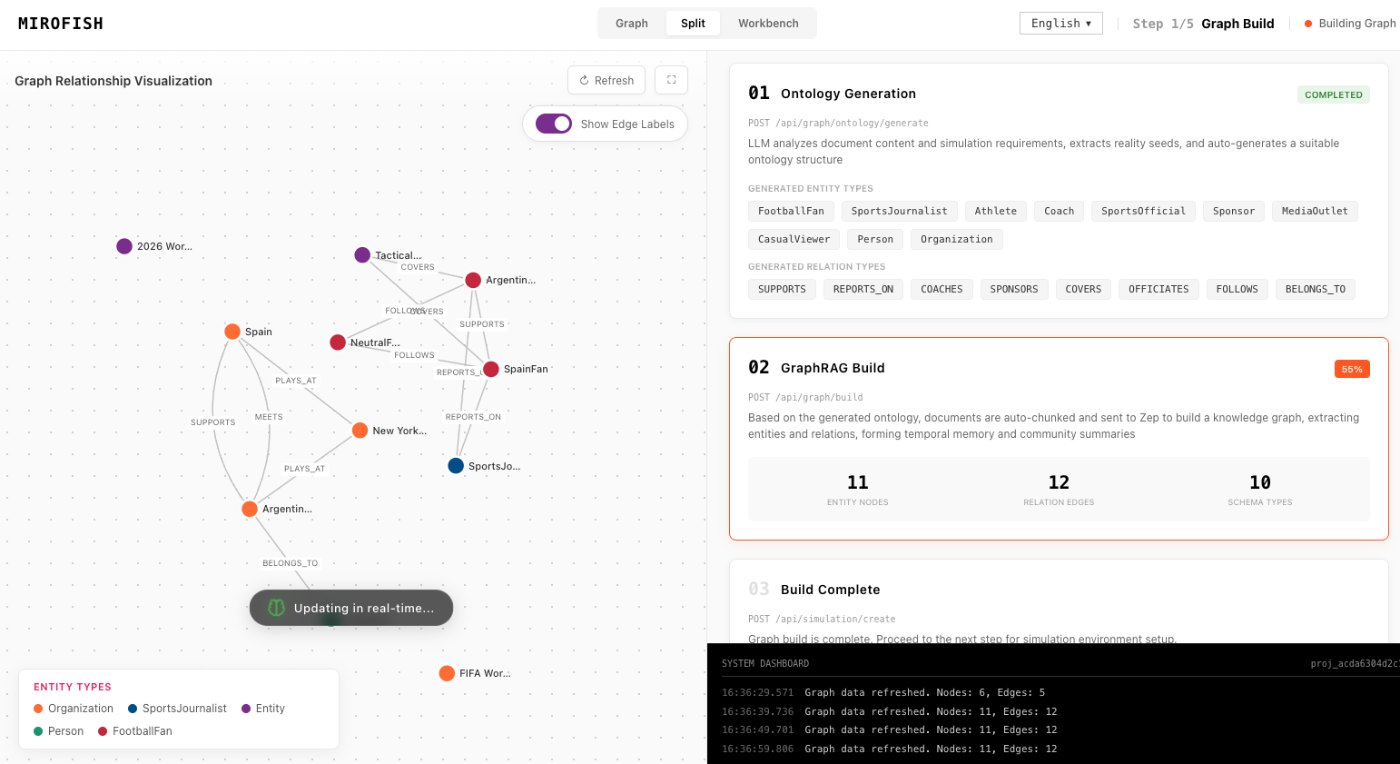
MiroFish agent configuration workspace used here to explain AI market simulator.
1Focused reader question
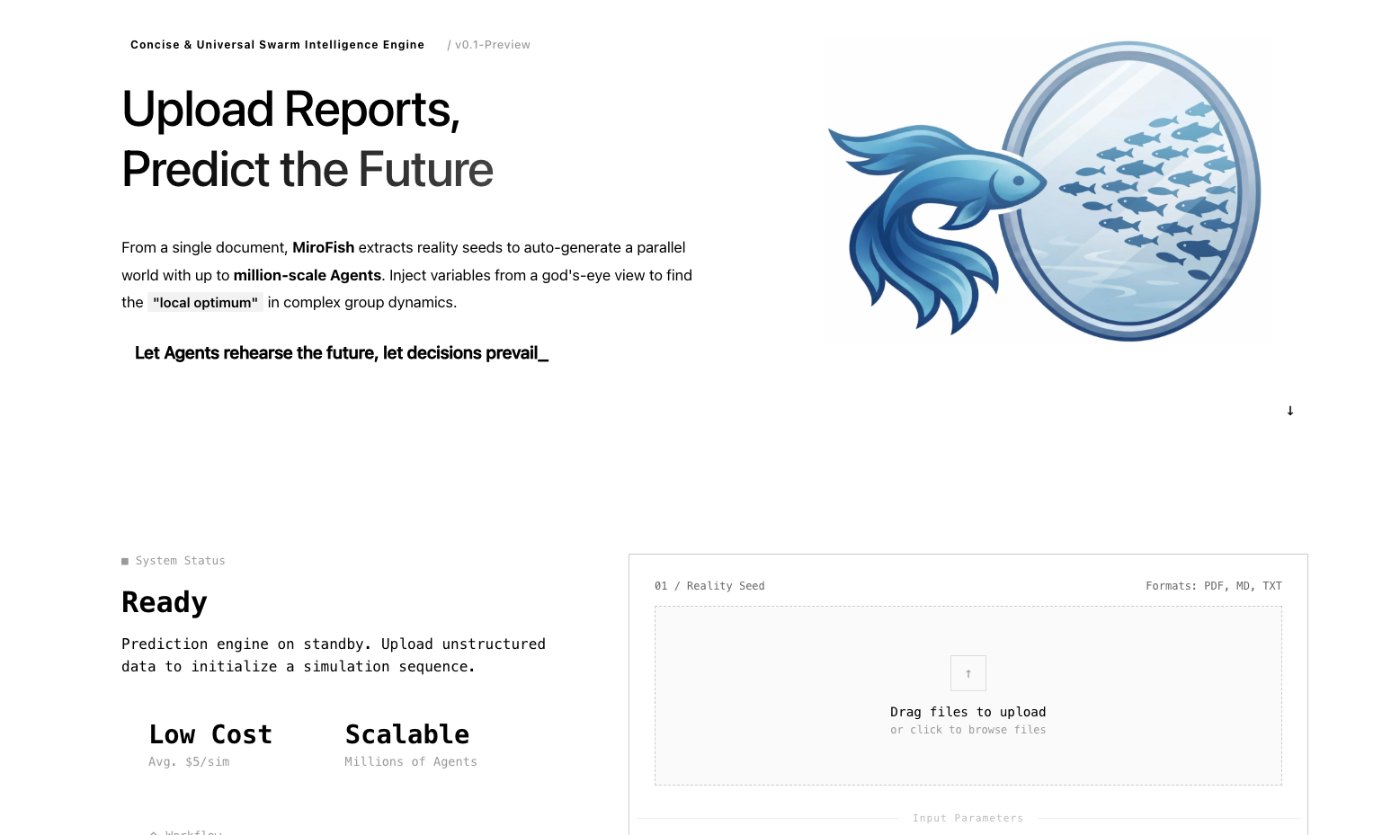
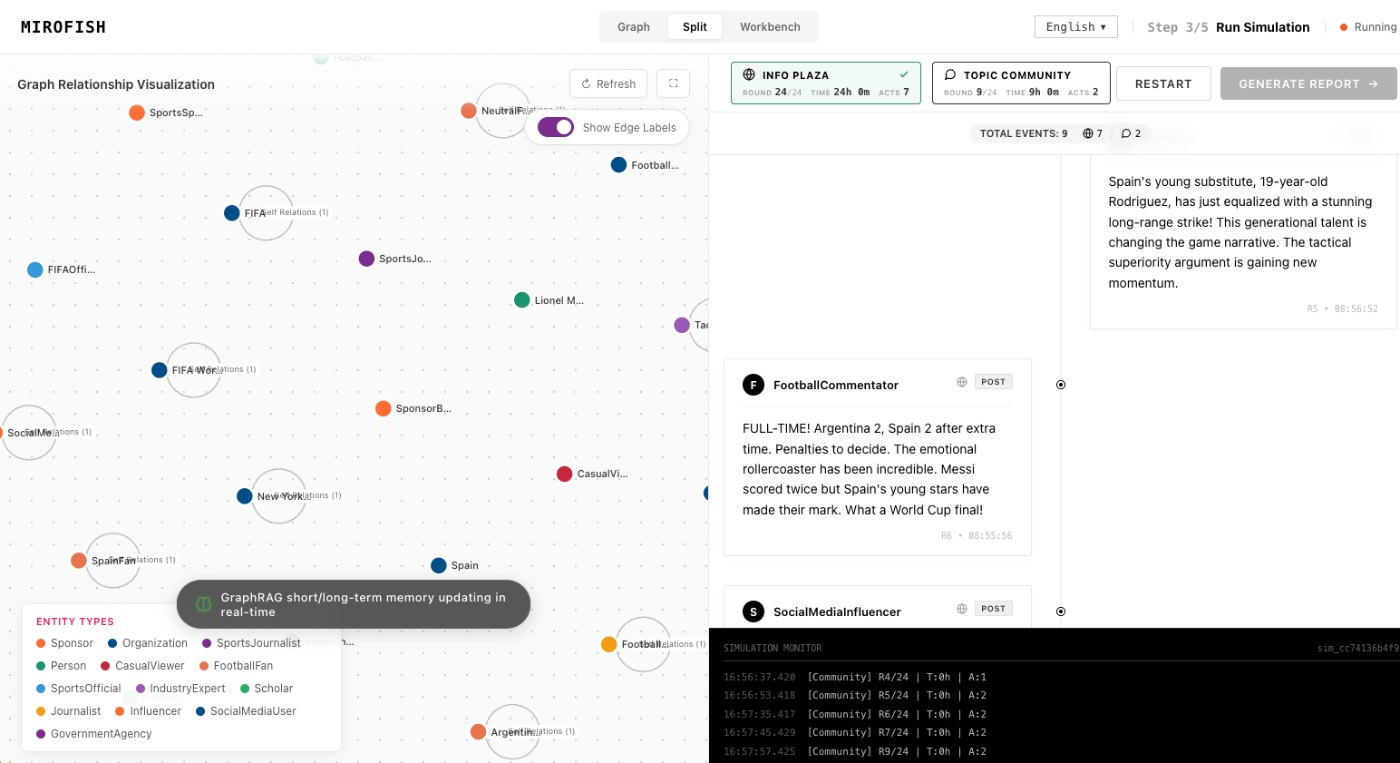
3MiroFish product images from the notepad set
2:30Animated workflow walkthrough with input, graph, agents, simulation, and report
Direct answer
A useful AI market simulator is not a price machine. It helps analysts and founders understand how market stories spread, stall, or reverse after new information appears. MiroFish is strongest when the market question involves people interpreting signals differently.
This includes launch demand, investor confidence, prediction-market narratives, adoption waves, competitor messaging, and reactions to public evidence. The output should become a research checklist, not a trade instruction.
Turn your question into a reviewable scenario
Use these steps to move from an initial question to a scenario, report, or practical next action.
Seed -> graph -> agents -> report
State the market story
Write the thesis and the strongest opposing interpretation.
Add catalyst material
Upload evidence that could change belief: news, release notes, demand data, or public commentary.
Model groups separately
Investors, buyers, competitors, media, and skeptics should not collapse into one voice.
Turn findings into monitoring
The report should tell you which facts to verify next.
Build a quick scenario worksheet
Draft the first MiroFish run on this page before opening a workspace.
Interactive worksheet
AI market simulator practical checklist
These checkpoints keep the page tightly matched to the exact search phrase while staying useful for a real MiroFish run.
Reader fit
AI market simulator guide checkpoint: Reader intent: a AI market simulator visitor should get the short answer, the right MiroFish workflow step, and a concrete way to continue without hunting through the site.
AI market simulator guide checkpoint: Source packet: use Market context, the catalyst, audience groups, opposing theses, timing, public evidence, constraints, and what decision the research will inform. Keep the first packet compact so the result can be traced back to evidence instead of broad prompting.
AI market simulator guide checkpoint: Workflow fit: connect the search phrase to seed material, graph review, role setup, simulation events, and a report that can be challenged by a human reader.
AI market simulator guide checkpoint: Report standard: the best result is A branch report with narrative paths, stakeholder reactions, weak assumptions, evidence to monitor, and follow-up runs for changed catalysts. That output should preserve assumptions, disagreement, and next actions rather than sounding certain.
AI market simulator guide checkpoint: Verification habit: mark which claims came from source context, which came from agent reaction, and which still need a fresh outside check before action.
AI market simulator guide checkpoint: Rerun trigger: choose one changed condition from the report and compare it with the baseline instead of changing the prompt, roles, and evidence all at once.
AI market simulator guide checkpoint: Decision use: treat the page as a planning aid, then move into MiroFish only after the question, actors, time horizon, and limit are clear.
AI market simulator guide checkpoint: Boundary: Use it for research structure, not trading advice, portfolio decisions, or guaranteed outcomes. A useful reader leaves with a sharper question, not a guarantee.
Prepare a useful first run
A market simulation starts with the story being tested. Write the thesis in plain language, then write the strongest contrary thesis beside it. The exercise is useful only when the run can compare why one group might believe the catalyst while another group discounts it.
Catalysts deserve special care. A product release, earnings note, regulation change, social proof event, analyst post, supply constraint, or community backlash can all change attention, but they do not affect every group equally. MiroFish should model the path from catalyst to interpretation to reaction, not jump directly to a number.
The report should name the evidence to monitor after the run. That might include buyer objections, sign-up quality, renewal risk, competitor messaging, press framing, analyst language, community sentiment, or operational capacity. These monitoring items make the output useful for research teams that need to decide what to watch next.
Keep the financial boundary explicit. Market simulation can support narrative research, launch planning, and risk review, but it should not become investment advice. The practical handoff is a list of claims, indicators, and assumptions to verify with current public sources or internal data.
Use group-level reactions instead of treating "the market" as one person. Builders, budget owners, analysts, enterprise buyers, community advocates, and competitors may interpret the same signal through different incentives. The report should show those interpretation paths so the team knows which audience requires better proof, timing, or positioning.
Review checklist
Before acting on a MiroFish output, check whether the scenario stayed inside the question you asked. The most useful output for this page is: A branch report with narrative paths, stakeholder reactions, weak assumptions, evidence to monitor, and follow-up runs for changed catalysts. The key limit is equally important: Use it for research structure, not trading advice, portfolio decisions, or guaranteed outcomes.
State the market story. Write the thesis and the strongest opposing interpretation.
Add catalyst material. Upload evidence that could change belief: news, release notes, demand data, or public commentary.
Model groups separately. Investors, buyers, competitors, media, and skeptics should not collapse into one voice.
Turn findings into monitoring. The report should tell you which facts to verify next.
What to compare in the output
Use these checkpoints to turn the first MiroFish result into a grounded next action.
Review before action
Catalyst: The event or evidence that changes attention. Starts the scenario clock. Verify timing.
Narrative branch: Different interpretations of the same signal. Shows disagreement. Avoid one-sided thesis.
Stakeholder group: Investors, buyers, operators, media, or competitors. Explains reaction paths. Use realistic roles.
Monitoring item: Fact to check after report. Makes output useful. Do outside research.
Watch the full MiroFish workflow
This 2 minute 30 second animated walkthrough moves from source material through graph construction, agent activity, simulation events, report review, and follow-up questions.
2:30 animated walkthrough
Follow the full animated workflow, then use the page-specific checklist to prepare your own MiroFish run.
Product screenshots from the workflow
These images come from the notepad MiroFish image set and are used as concrete workflow references rather than decoration.
2 more images
MiroFish seed material upload screen used as a concrete workflow reference.MiroFish final report interface used as a concrete workflow reference.
A realistic use case
A team evaluating a new AI feature can simulate how builders, enterprise buyers, analysts, and competitors react. The report may reveal enthusiasm, proof anxiety, pricing friction, and a competitor-response branch.
The value of the page is practical: define the job, prepare the right input, read the output with its limits visible, and choose a next step that can be checked outside the page.
How to read the report
Read a MiroFish report as a map of assumptions and reactions. Mark source-backed claims, uncertain claims, and follow-up questions separately. Then choose one change for the next run instead of accepting the first report as final.