Simulation report: what changed, who reacted, what to verify.
The MiroFish simulation report is the handoff from model activity to human decision. It should make scenario branches readable without pretending that the future is settled.
MiroFish ReportAgent review screen used here to explain simulation report.
1Focused reader question
4MiroFish product images from the notepad set
2:30Animated workflow walkthrough with input, graph, agents, simulation, and report
Direct answer
A good simulation report is not just a narrative summary. It tells you which agents reacted, which assumptions mattered, which branch gained momentum, which evidence remains weak, and what follow-up analysis should happen before a real decision.
For readers, the most useful habit is to mark the report in three colors: findings that are source-backed, assumptions that need checking, and action items that belong outside MiroFish.
Turn your question into a reviewable scenario
Use these steps to move from an initial question to a scenario, report, or practical next action.
Seed -> graph -> agents -> report
Read the summary last if needed
First check the source, actors, time horizon, and scenario question.
Find branch differences
Look for why one path diverges from another, not only which path is labeled likely.
Mark evidence gaps
Every weak source or unknown variable should become a follow-up task.
Compare a rerun
Change one assumption and compare reports to see what is stable.
Build a quick scenario worksheet
Draft the first MiroFish run on this page before opening a workspace.
Interactive worksheet
Simulation report practical checklist
These checkpoints keep the page tightly matched to the exact search phrase while staying useful for a real MiroFish run.
Reader fit
Simulation report guide checkpoint: Reader intent: a simulation report visitor should get the short answer, the right MiroFish workflow step, and a concrete way to continue without hunting through the site.
Simulation report guide checkpoint: Source packet: use The original seed material, the scenario requirement, the completed simulation run, important event logs, and the decision the report is meant to inform. Keep the first packet compact so the result can be traced back to evidence instead of broad prompting.
Simulation report guide checkpoint: Workflow fit: connect the search phrase to seed material, graph review, role setup, simulation events, and a report that can be challenged by a human reader.
Simulation report guide checkpoint: Report standard: the best result is A structured report with summary, branch comparison, persona reactions, risk notes, evidence gaps, and next-step analysis prompts. That output should preserve assumptions, disagreement, and next actions rather than sounding certain.
Simulation report guide checkpoint: Verification habit: mark which claims came from source context, which came from agent reaction, and which still need a fresh outside check before action.
Simulation report guide checkpoint: Rerun trigger: choose one changed condition from the report and compare it with the baseline instead of changing the prompt, roles, and evidence all at once.
Simulation report guide checkpoint: Decision use: treat the page as a planning aid, then move into MiroFish only after the question, actors, time horizon, and limit are clear.
Simulation report guide checkpoint: Boundary: A report can be clear and still be wrong if the input, persona setup, or assumptions were weak. Treat it as a decision aid. A useful reader leaves with a sharper question, not a guarantee.
Prepare a useful first run
A reader should approach the document like an analyst, not like a spectator. First identify the baseline, the time horizon, and the branch labels. Then look for the evidence trail under each claim. A clear report will let you move from a summary sentence to the simulated events and source context that support it.
The strongest section is often the disagreement section. If every role appears to agree, the run may have been too narrow or the personas may need sharper incentives. When groups split, capture the reason for the split: proof, cost, timing, trust, policy pressure, novelty, operational risk, or narrative framing.
After reading, turn the document into three lists: facts to verify outside the model, assumptions to keep for the next run, and conditions that would reverse the conclusion. That practice makes the report a decision artifact instead of a polished story.
A professional handoff should also make ownership clear. Assign each verification item to a real team, source, or research method: customer interview, finance review, policy check, support ticket sample, public data pull, or stakeholder meeting. The document becomes stronger when every next step has a concrete owner and evidence source.
Review checklist
Before acting on a MiroFish output, check whether the scenario stayed inside the question you asked. The most useful output for this page is: A structured report with summary, branch comparison, persona reactions, risk notes, evidence gaps, and next-step analysis prompts. The key limit is equally important: A report can be clear and still be wrong if the input, persona setup, or assumptions were weak. Treat it as a decision aid.
Read the summary last if needed. First check the source, actors, time horizon, and scenario question.
Find branch differences. Look for why one path diverges from another, not only which path is labeled likely.
Mark evidence gaps. Every weak source or unknown variable should become a follow-up task.
Compare a rerun. Change one assumption and compare reports to see what is stable.
What to compare in the output
Use these checkpoints to turn the first MiroFish result into a grounded next action.
Review before action
Summary: Decision-relevant branch overview. Fast orientation. Check details before action.
Agent reactions: How personas responded. Shows audience split. Review persona quality.
Evidence gap: What was weak or missing. Creates verification tasks. Do outside research.
Follow-up prompt: Next scenario question. Keeps learning moving. Change one variable.
Watch the full MiroFish workflow
This 2 minute 30 second animated walkthrough moves from source material through graph construction, agent activity, simulation events, report review, and follow-up questions.
2:30 animated walkthrough
Follow the full animated workflow, then use the page-specific checklist to prepare your own MiroFish run.
Product screenshots from the workflow
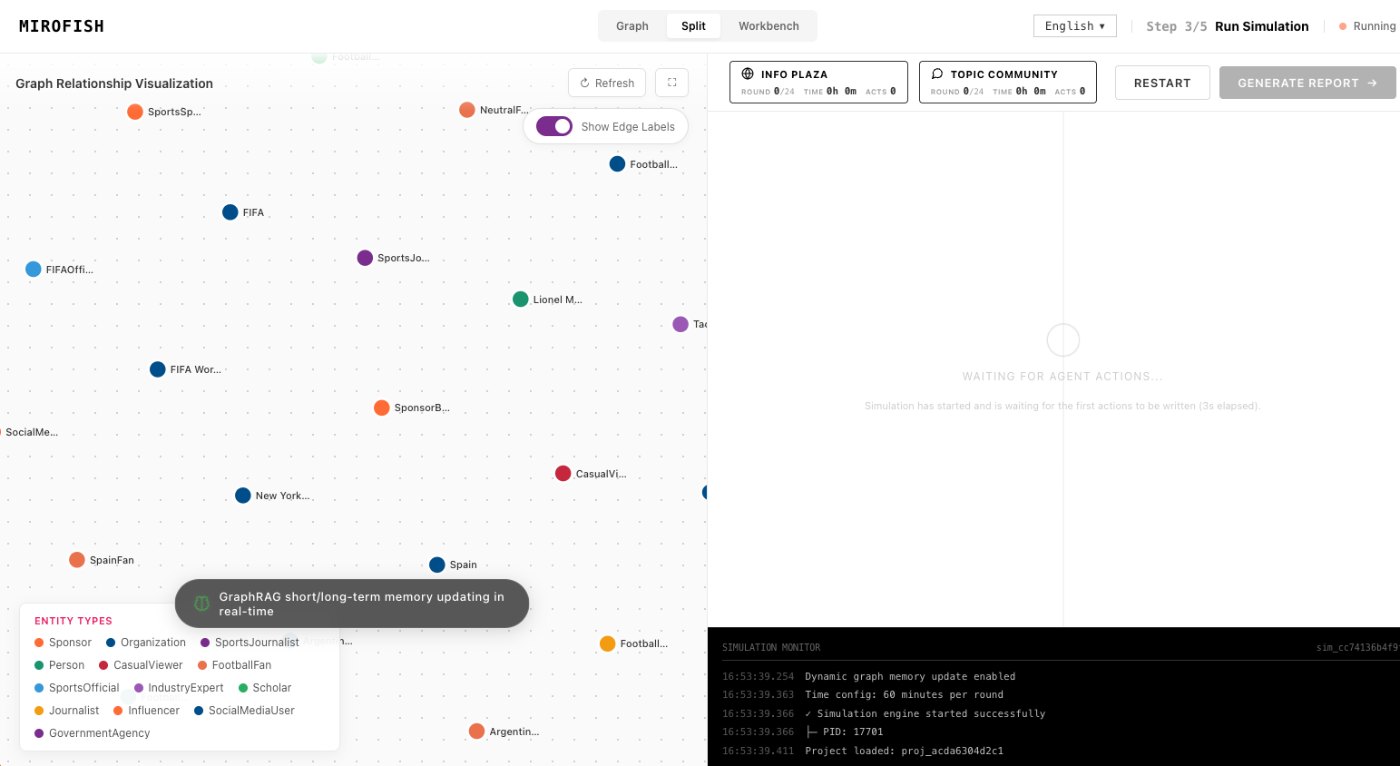
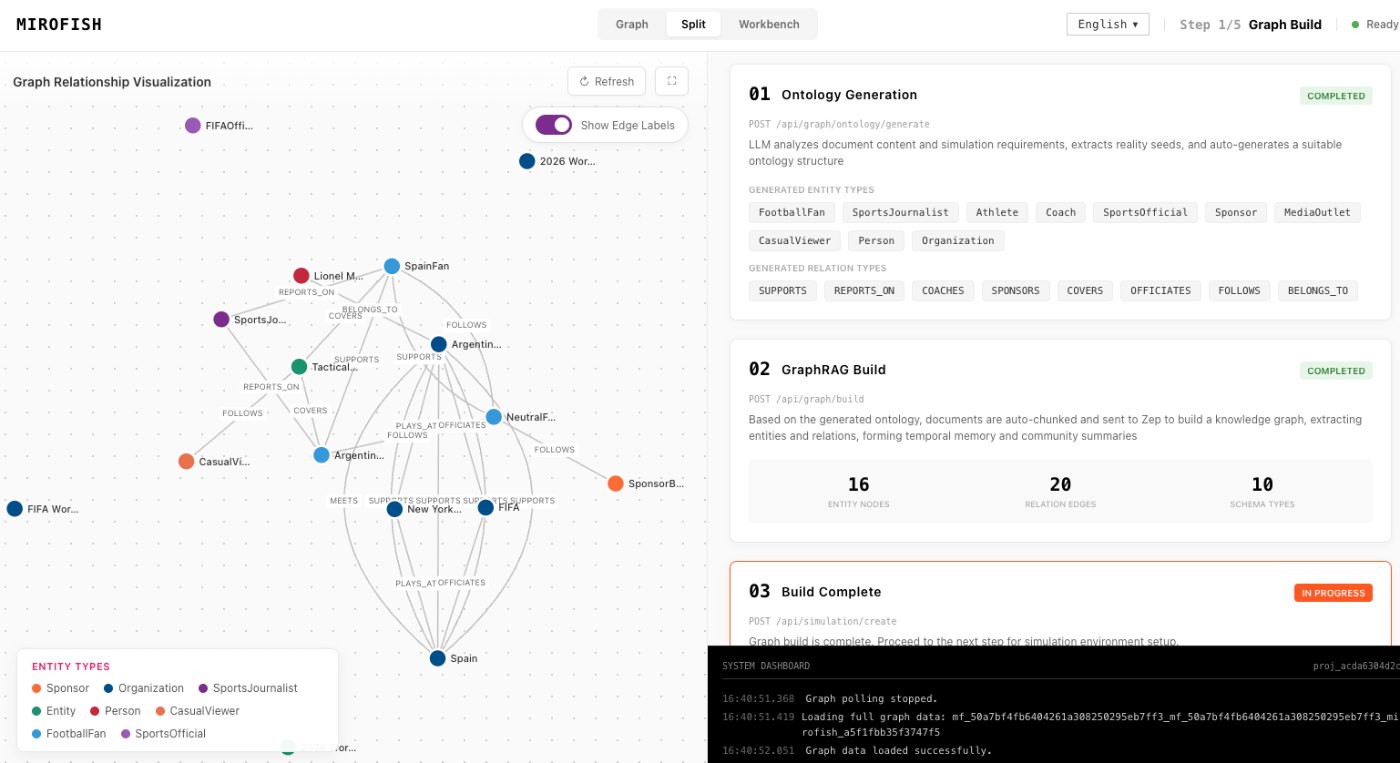
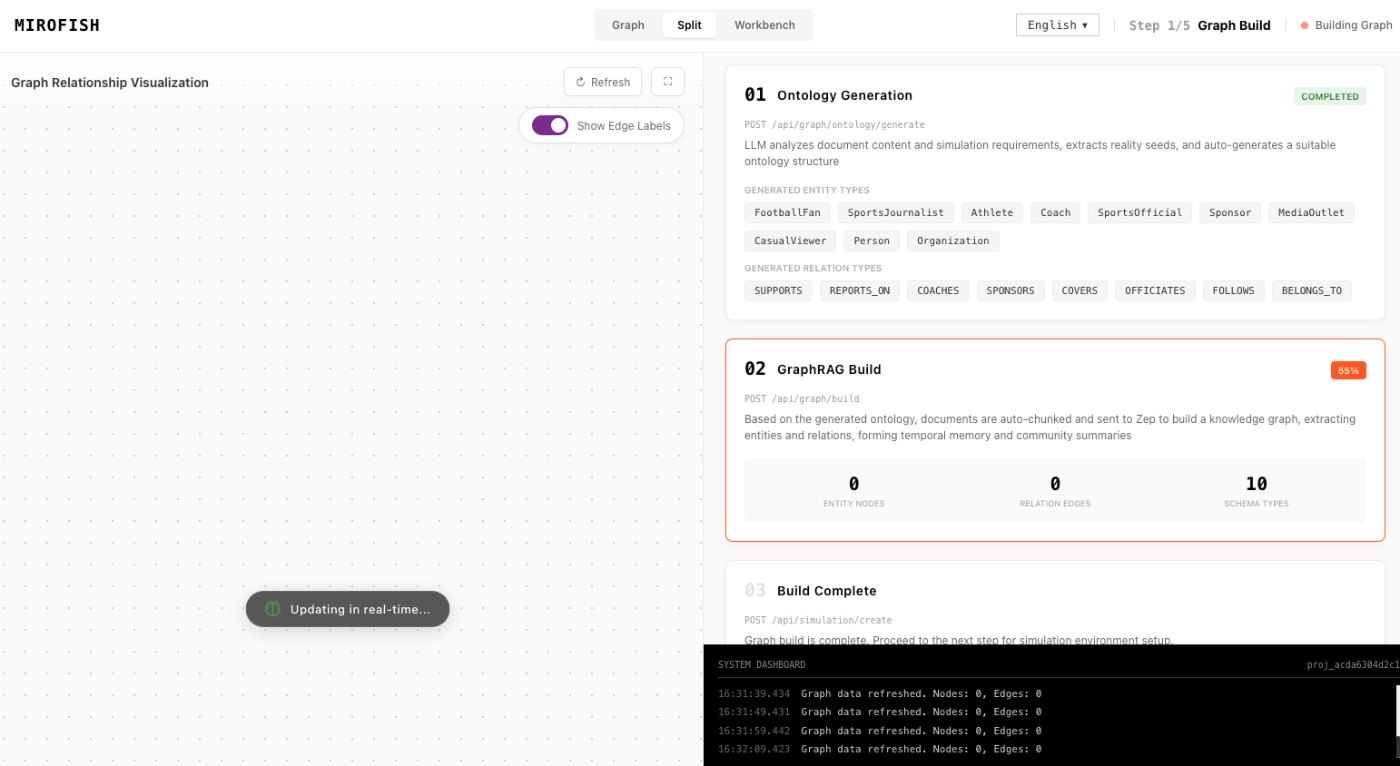
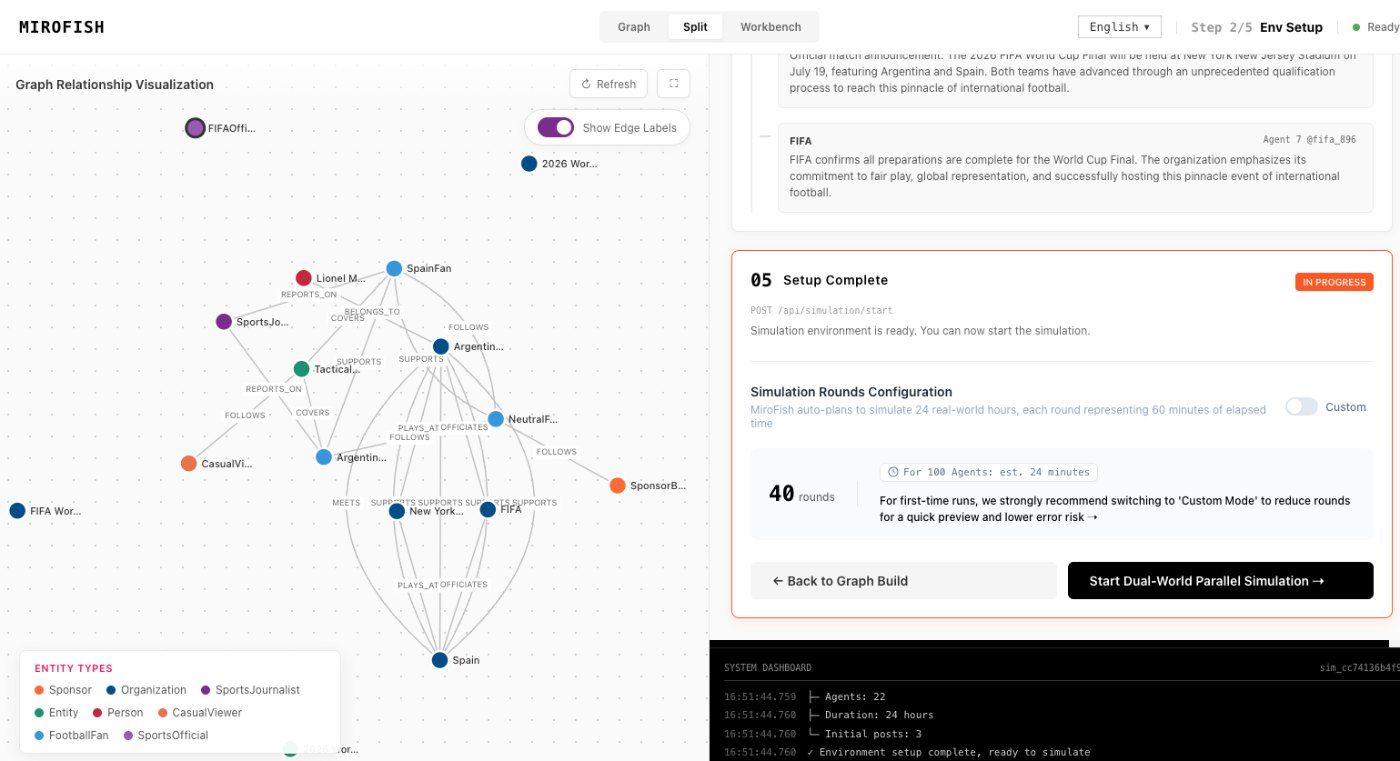
These images come from the notepad MiroFish image set and are used as concrete workflow references rather than decoration.
3 more images
MiroFish simulation progress screen used as a concrete workflow reference.MiroFish source-to-graph workspace used as a concrete workflow reference.MiroFish report generation workspace used as a concrete workflow reference.
A realistic use case
A simulation report for a public announcement may show fast supporter enthusiasm, slow institutional trust, and a risk that critics focus on missing proof. The next action is not to believe the report; it is to add proof material and run a sharper follow-up.
The value of the page is practical: define the job, prepare the right input, read the output with its limits visible, and choose a next step that can be checked outside the page.
How to read the report
Read a MiroFish report as a map of assumptions and reactions. Mark source-backed claims, uncertain claims, and follow-up questions separately. Then choose one change for the next run instead of accepting the first report as final.