Agent personas make MiroFish scenarios multi-viewpoint.
Agent personas are the simulated people, organizations, or stakeholder roles that react inside a MiroFish run. They should be grounded by source material and reviewed before their reactions shape a report.
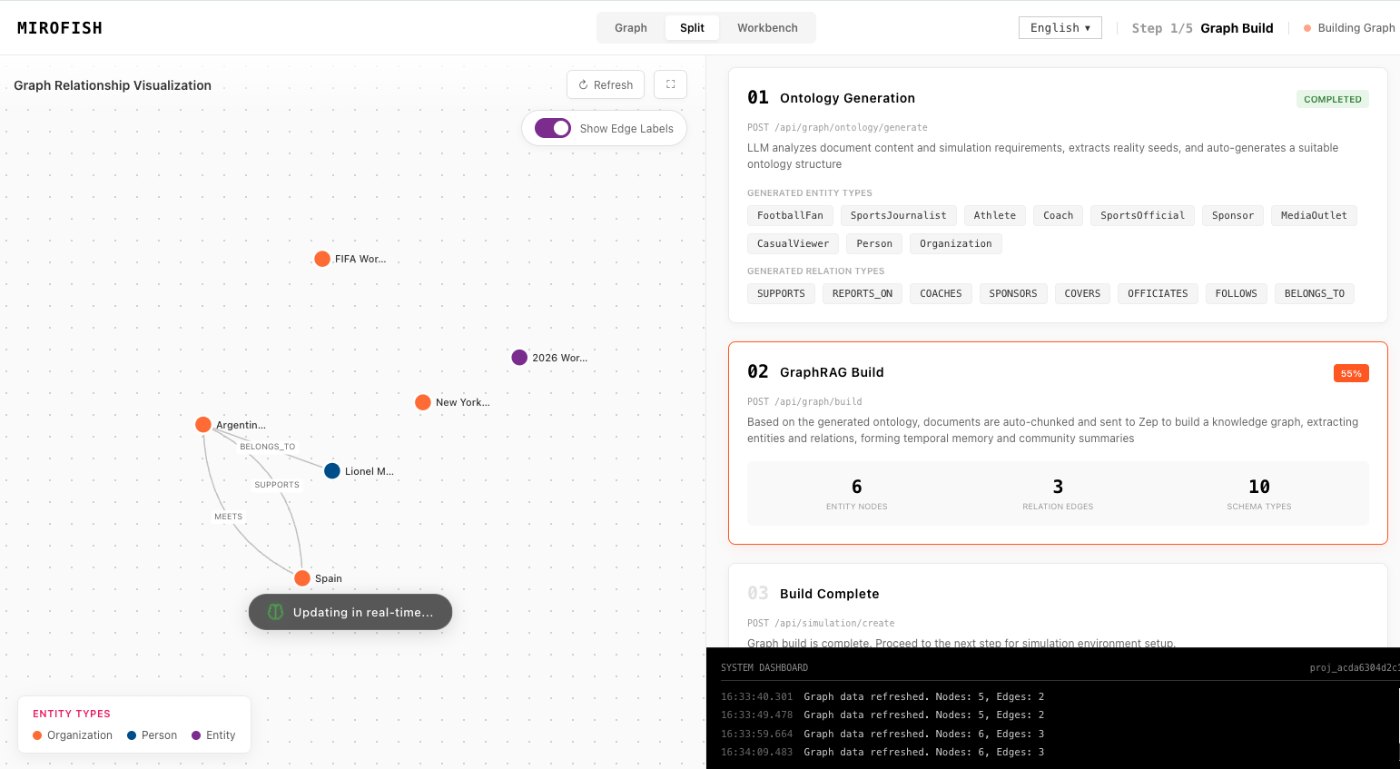
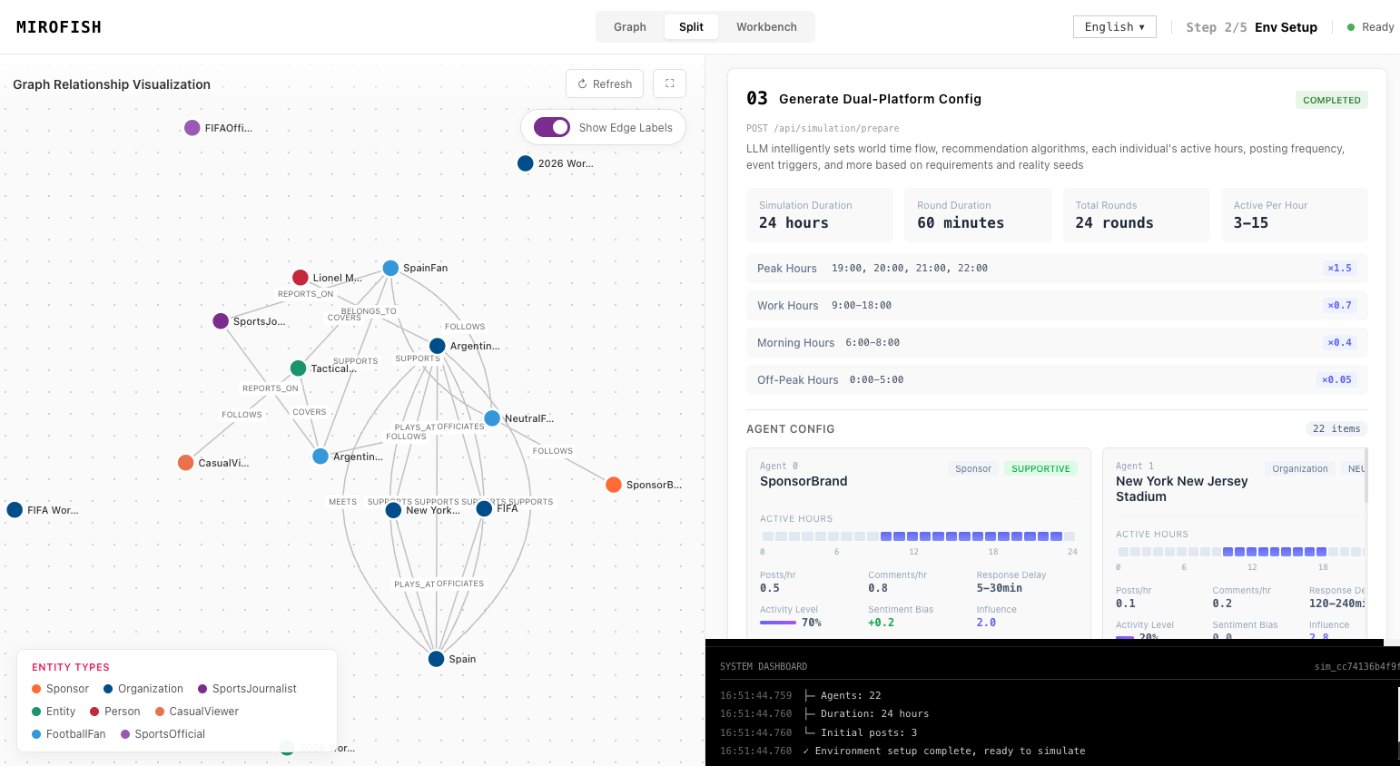
MiroFish persona setup workspace used here to explain agent personas.
1Focused reader question
3MiroFish product images from the notepad set
2:30Animated workflow walkthrough with input, graph, agents, simulation, and report
Direct answer
When people ask about agent personas, they usually want to know how simulated perspectives are created and what they are allowed to represent. In MiroFish, personas are not private profiles. They are role-based viewpoints built from seed material, graph context, and scenario goals.
A good persona has a clear role, incentives, knowledge boundary, likely objections, and constraints. A weak persona is just a label with a mood attached.
Turn your question into a reviewable scenario
Use these steps to move from an initial question to a scenario, report, or practical next action.
Seed -> graph -> agents -> report
Define roles
Customer, investor, regulator, competitor, fan, critic, operator, or internal team.
Add incentives
A persona reacts more usefully when its motivation and constraint are visible.
Set knowledge boundaries
Do not let every persona know every private detail unless the scenario requires it.
Review the mix
Check whether the set is balanced enough to reveal disagreement.
Build a quick scenario worksheet
Draft the first MiroFish run on this page before opening a workspace.
Interactive worksheet
Agent personas practical checklist
These checkpoints keep the page tightly matched to the exact search phrase while staying useful for a real MiroFish run.
Reader fit
Agent personas guide checkpoint: Reader intent: a agent personas visitor should get the short answer, the right MiroFish workflow step, and a concrete way to continue without hunting through the site.
Agent personas guide checkpoint: Source packet: use Stakeholder groups, role descriptions, public or user-provided context, decision incentives, boundaries, and the reactions you need to compare. Keep the first packet compact so the result can be traced back to evidence instead of broad prompting.
Agent personas guide checkpoint: Workflow fit: connect the search phrase to seed material, graph review, role setup, simulation events, and a report that can be challenged by a human reader.
Agent personas guide checkpoint: Report standard: the best result is A set of reviewable simulated perspectives that can interact, disagree, respond to events, and feed a report with role-specific evidence. That output should preserve assumptions, disagreement, and next actions rather than sounding certain.
Agent personas guide checkpoint: Verification habit: mark which claims came from source context, which came from agent reaction, and which still need a fresh outside check before action.
Agent personas guide checkpoint: Rerun trigger: choose one changed condition from the report and compare it with the baseline instead of changing the prompt, roles, and evidence all at once.
Agent personas guide checkpoint: Decision use: treat the page as a planning aid, then move into MiroFish only after the question, actors, time horizon, and limit are clear.
Agent personas guide checkpoint: Boundary: Do not use personas to impersonate private individuals or invent sensitive personal details. Keep them role-based and source-grounded. A useful reader leaves with a sharper question, not a guarantee.
Prepare a useful first run
Design the persona set like a coverage map. Start with the stakeholder groups that can change the outcome, then give each role a reason to care. A buyer persona may care about proof and switching cost, while an operator may care about rollout burden, and a skeptic may test the weakest claim. The goal is not theatrical variety; it is useful disagreement.
Each card should expose role, goal, constraint, knowledge boundary, and likely objection. Those fields keep the persona auditable. If a reaction appears in the event stream, the reviewer can ask whether it follows from the card or whether the setup accidentally allowed every role to know the same facts and share the same incentive.
Persona design also affects fairness. Do not invent private attributes or sensitive traits to make a role feel realistic. Use public context, user-provided source material, and role-level incentives. The right level of detail is enough to explain reactions without pretending to know a real person.
After a run, evaluate the persona mix by looking at divergence. If every role reacts the same way, the set may be too narrow or the incentives may be too vague. If one role dominates every branch, add a counterweight or tighten the source boundary. The purpose is a balanced simulation that reveals useful tensions for the report.
Review checklist
Before acting on a MiroFish output, check whether the scenario stayed inside the question you asked. The most useful output for this page is: A set of reviewable simulated perspectives that can interact, disagree, respond to events, and feed a report with role-specific evidence. The key limit is equally important: Do not use personas to impersonate private individuals or invent sensitive personal details. Keep them role-based and source-grounded.
Define roles. Customer, investor, regulator, competitor, fan, critic, operator, or internal team.
Add incentives. A persona reacts more usefully when its motivation and constraint are visible.
Set knowledge boundaries. Do not let every persona know every private detail unless the scenario requires it.
Review the mix. Check whether the set is balanced enough to reveal disagreement.
What to compare in the output
Use these checkpoints to turn the first MiroFish result into a grounded next action.
Review before action
Role: Who the persona represents. Defines perspective. Avoid private identity claims.
Incentive: What the persona wants or avoids. Creates realistic tension. Keep it source-grounded.
Knowledge boundary: What the persona can know. Prevents unrealistic reactions. Limit private context.
Behavior cue: How the persona responds under pressure. Improves simulation contrast. Review before report.
Watch the full MiroFish workflow
This 2 minute 30 second animated walkthrough moves from source material through graph construction, agent activity, simulation events, report review, and follow-up questions.
2:30 animated walkthrough
Follow the full animated workflow, then use the page-specific checklist to prepare your own MiroFish run.
Product screenshots from the workflow
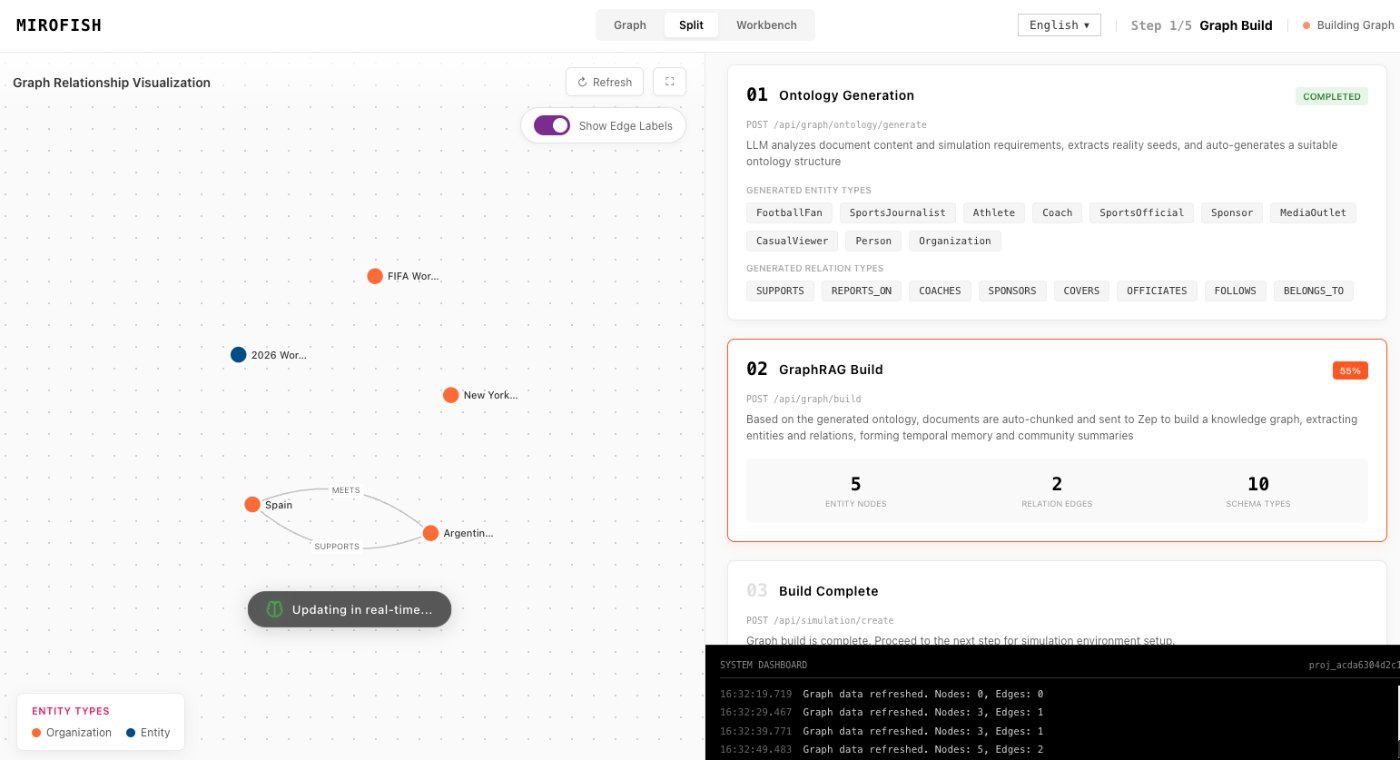
These images come from the notepad MiroFish image set and are used as concrete workflow references rather than decoration.
2 more images
MiroFish event and reaction workspace used as a concrete workflow reference.MiroFish relationship graph review used as a concrete workflow reference.
A realistic use case
For a pricing scenario, MiroFish might create buyer, procurement, competitor, customer-success, and skeptical analyst personas. The report becomes better when those personas disagree for traceable reasons.
The value of the page is practical: define the job, prepare the right input, read the output with its limits visible, and choose a next step that can be checked outside the page.
How to read the report
Read a MiroFish report as a map of assumptions and reactions. Mark source-backed claims, uncertain claims, and follow-up questions separately. Then choose one change for the next run instead of accepting the first report as final.